
Describe the wall
New build or existing wall, and any signs of movement or water staining, plus your suburb.
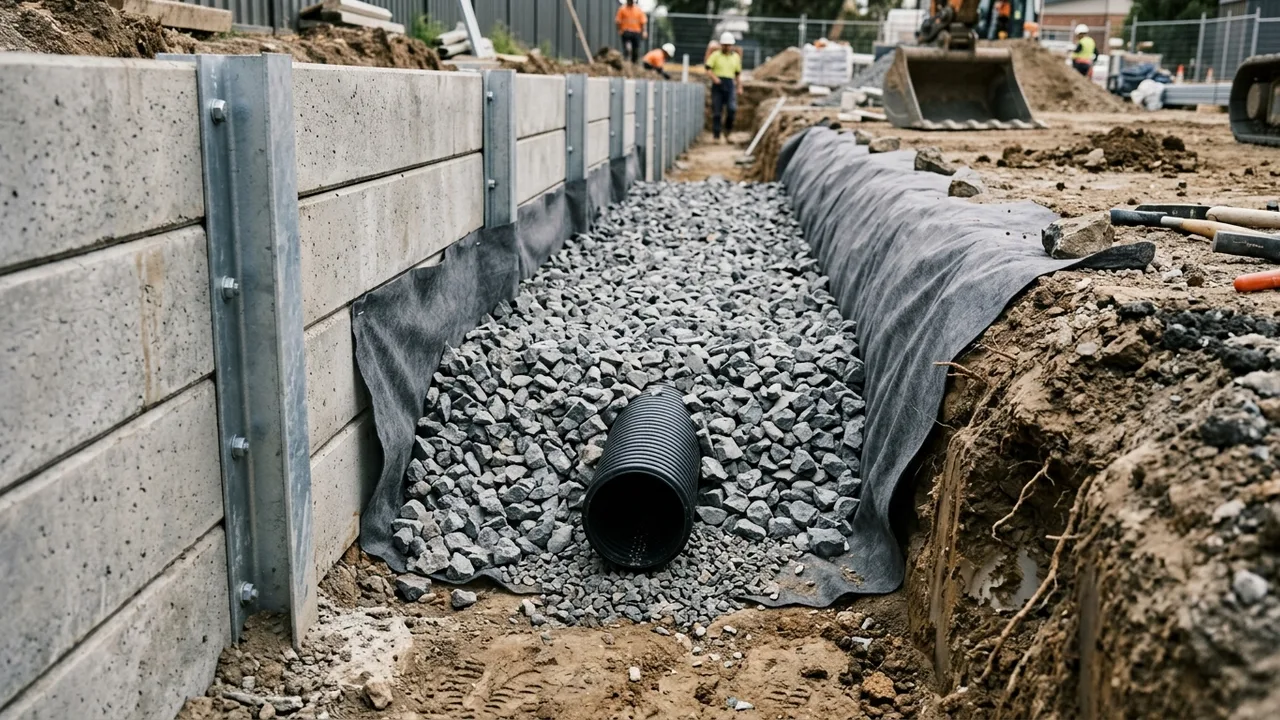
Ag-drain, gravel and geofabric drainage behind every wall - the structural detail that stops failures in reactive clay.
Drainage is the part of a retaining wall nobody sees and the reason most failed walls fail. Behind every properly built wall sits a subsoil system: an ag-drain (a perforated agricultural pipe, sometimes called agi pipe) bedded in free-draining gravel, backed with geofabric, and connected to a legal stormwater outlet so groundwater is carried away before it can pile up behind the wall. On Ipswich's reactive reactive clay that detail is not optional - water pressure (hydrostatic load) building behind a wall is what cracks, bulges and rotates it. A good retaining wall team treats drainage as structural, building it into new walls and retrofitting it to existing walls showing the early signs of trouble. Tell us whether it is a new wall or an existing one giving trouble, with your suburb, and the next step begins with a site-specific assessment.
A perforated ag-drain bedded in free-draining gravel along the base behind the wall, so groundwater is collected low and carried off rather than rising against the face.
Geotextile fabric separating the clay backfill from the drainage gravel so soil cannot wash in and clog the ag-drain, keeping the system working for the life of the wall.
A positive connection from the ag-drain to an approved stormwater outlet, with surface grading away from the wall, all kept within your property boundary.
The signs of a drainage problem on reactive clay
Ipswich and the wider Ipswich district sit on highly reactive black clay that swells when wet and shrinks when dry. When water cannot escape from behind a wall, two things happen at once: the trapped water adds hydrostatic pressure pushing the wall outward, and the saturated clay heaves against it. Together they crack masonry, bow timber and sleeper walls, and slowly rotate a wall forward off its footing. Almost every wall that leans, bulges or weeps muddy water after rain is really showing a drainage failure, not just age.
The early warnings are worth catching before the wall moves: water staining or efflorescence on the face, soil washing out from the base after a storm, a wall that has leaned since the last wet season, or weep holes that have clogged and stopped weeping. Our team reads those signs, digs to find whether the original ag-drain was ever installed or has silted up, and retrofits a proper gravel-and-geofabric drain rather than patching the symptom.
Done right, the system is simple and lasts: ag-drain low in clean gravel, geofabric keeping the clay out, a fall to a real stormwater connection, and surface grading that sheds rain away from the wall - every part inside your boundary so it never concentrates water onto a neighbour. It is the cheapest insurance a retaining wall can have, and on Ipswich clay it is the difference between a wall that stands for decades and one back on the repair list in a few wet seasons.
New build or existing wall, and any signs of movement or water staining, plus your suburb.
A site details are checked the existing drainage or designs it in, and sends a written quote.
The face exposed where needed, ag-drain bedded in gravel, geofabric set against the clay.
Drain connected to a stormwater outlet, backfilled, and the surface graded away from the wall.
Our team builds drainage as part of the wall's structure, not a landscaping afterthought, because on reactive clay it is the biggest factor in whether a wall lasts.
The builder wraps the gravel and ag-drain in geotextile so Ipswich clay cannot silt up the system - the reason so many old walls have drains that long ago stopped draining.
Drainage is connected to a legal stormwater outlet and graded so it never concentrates water onto a neighbour, keeping the wall compliant as well as dry.
On a new wall, subsoil drainage is built into the wall quote. A retrofit is priced after the builder assesses what is already there and how much of the face has to be exposed; figures stay as guides until a written quote is given.
| Item | Indicative range |
|---|---|
| Subsoil drainage built into a new wall | included in wall quote |
| Drainage retrofit / remediation to an existing wall | by quote after assessment |
Real questions Ipswich homeowners ask about this work.
Pick your suburb for the local notes, or submit the form for a free review.
Request an Ipswich builder callback
Planning retaining wall drainage & subsoil systems in Ipswich?
Send the form for retaining wall drainage & subsoil systems across the Ipswich region. A local retaining wall specialist can respond clearly to discuss the site and prepare a written quote.