
Send the slope
Photos of the slope, the rough height and the stone look you want, plus your suburb.
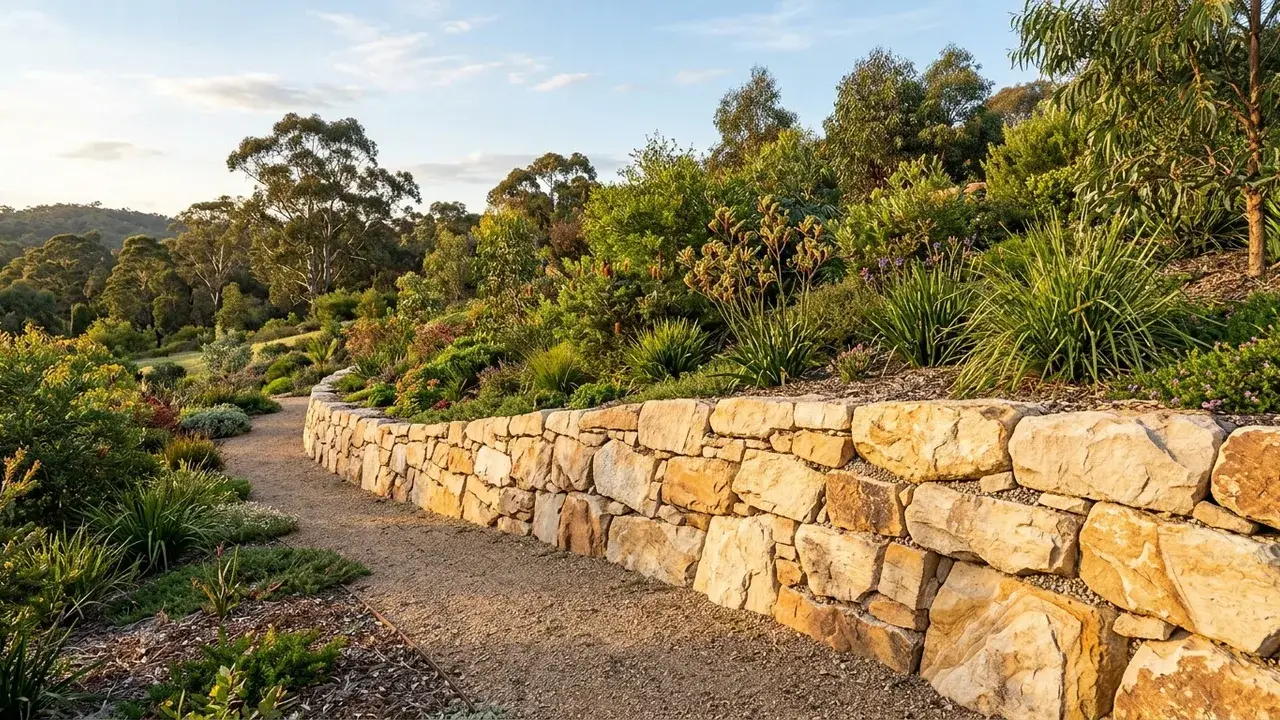
Natural sandstone and boulder walls battered back for a rugged, free-draining finish that suits range blocks.
A rock or boulder wall trades the straight lines of sleepers and block for a natural, rugged look that settles into a landscape, which is why it suits the acreage and sloping blocks around Ipswich and the surrounding Ipswich district. Built from natural sandstone blocks or large boulders, stacked and battered back (leaned into the slope for stability), it is a free-draining wall - water finds its way through the gaps rather than building pressure behind a solid face. The builder sets the larger stones as the structure and packs the wall so it locks together and sheds water, founding it properly so it does not creep down the slope. Tell us the slope, the rough height and the look you are after, with your suburb, and the next step begins with a site check and quote.
Cut or rough natural sandstone blocks stacked and battered into the slope for a structured stone wall with a warm, natural face that ages well.
Large natural boulders placed and locked together as a rugged, free-draining wall that suits acreage, rural-residential blocks and naturalistic landscaping.
Stone steps, garden edging and tiered stone features that tie the wall into the rest of the yard, using the same local stone for a consistent look.
What makes a stone wall stand the test
The beauty of a rock or boulder wall is that it drains itself - the gaps between stones let water through, so it never develops the pressure behind it that fails a solid wall. That makes it a natural fit for the seeping, sloping ground on the range escarpment and the rural blocks at Ripley and the surrounding Ipswich district. But free-draining is not no-care: our team founds the base on firm ground and grades the surface so runoff is directed, because a stone wall undermined at the toe will slump no matter how well it is stacked.
Battering is the other half of the equation. A stone or boulder wall leans back into the slope rather than standing dead vertical, and that backward lean is what keeps it stable as the ground behind it moves. Stack the same stones straight up and the wall wants to topple; battered correctly and locked together, it holds. Bedding the larger boulders as the load-bearers, with smaller stone packed into the voids, is the craft that separates a wall that lasts from a pile that spreads.
Stone suits lower-to-moderate walls and naturalistic settings; once you need real engineered height or a wall carrying a driveway above, the conversation shifts to concrete sleepers or block, and our team is straight about that line. Where stone is right, it is a hard-wearing, low-maintenance wall with a look manufactured materials cannot match.
Photos of the slope, the rough height and the stone look you want, plus your suburb.
A site details are checked access and footing ground and sends a written fixed-price quote.
The toe of the wall founded on firm ground, with drainage directed away from the base.
Larger stones bedded as load-bearers, battered back and locked, voids packed and graded.
The builder leans the wall back into the slope and beds the large stones as load-bearers, so it stays put as the ground moves rather than spreading over the years.
Stone walls let water through the gaps, but the toe is still founded firm and runoff graded away, so the wall is never undermined at the base where slumps start.
Natural sandstone and boulder reads right on Ipswich's acreage and sloping blocks, and our team carries the same stone through steps and edging.
Rock and boulder walls are priced per square metre of wall face, and stone supply and access vary the price a lot. The band is a guide and excludes GST, excavation, cartage and difficult access; your retaining wall specialist confirms with a written quote.
| Item | Indicative range |
|---|---|
| Rock / boulder wall (per m2 of wall face, supplied and installed) | ~$320 - $520+ |
| Stone supply / cartage (site dependent) | by quote |
Real questions Ipswich homeowners ask about this work.
Pick your suburb for the local notes, or submit the form for a free review.
Request an Ipswich builder callback
Planning rock & boulder retaining walls in Ipswich?
Send the form for rock & boulder retaining walls across the Ipswich region. A local retaining wall specialist can respond clearly to discuss the site and prepare a written quote.