
Send the site
Length, height and what the wall holds - batter, cutting or boundary - plus your suburb.
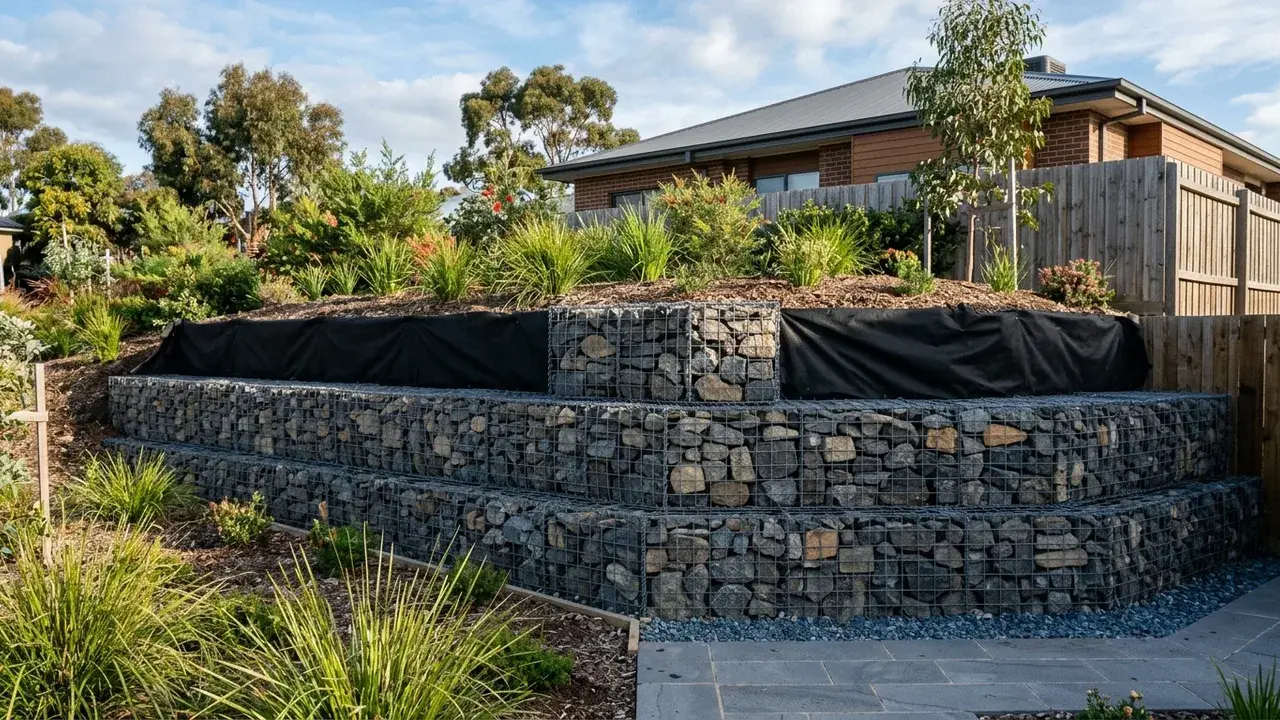
Rock-filled wire baskets that form a strong, free-draining wall well suited to sloping and erosion-prone sites.
A gabion wall is built from gabion baskets - galvanised steel wire cages packed with rock - stacked and tied into a wall that is both heavy and completely free-draining. The weight of the rock-filled baskets holds the ground back (a gravity wall), while water runs straight through the stone, which makes gabions a strong answer for sloping, seepage-prone and erosion-exposed sites where a solid wall would fight water pressure. They suit creek batters, rural-residential cuttings and long, lower-height retaining where a rugged engineered look is wanted. The builder founds the baskets on a level base, fills them densely so they do not settle, and backs them with geofabric so the surrounding clay cannot wash into the rock. Tell us the length, the height and what the wall is holding, with your suburb, and the next step begins with a site check and quote.
Galvanised (and PVC-coated where exposure demands) steel wire baskets supplied in the sizes the wall needs, tied together into a continuous, stable structure.
Hard, durable rock hand-packed and machine-filled densely into the baskets so the wall reaches its full gravity weight and does not settle or bulge over time.
Geotextile fabric behind the baskets separates the soil from the rock fill so clay cannot wash through, while the wall itself drains freely by design.
Where gabions beat a solid wall
On a seepage-prone or erosion-exposed site - a creek batter near Karalee, a cutting on a Ripley or Redbank Plains acreage block - the enemy of most walls is water building behind a solid face. Gabions sidestep that entirely: the rock-filled baskets let water pass straight through, so there is no pressure to relieve. That free-draining behaviour, plus the sheer weight holding the soil back, is why gabions are a go-to for ground that stays wet or moves.
The strength of a gabion comes from how densely the baskets are filled and how well they are founded and tied. Our team packs the rock hard - hand-placing the face stones and filling the core tight - so the baskets do not slump and the wall keeps its line. A loosely filled gabion settles, bulges and loses the gravity weight it relies on, which is why the filling is craft work, not just tipping rock into a cage.
Geofabric behind the wall is the detail that protects it long term. Without it, the reactive Ipswich district clay slowly washes into the rock voids, clogging the free-draining quality that made gabions the right choice. With a geotextile separating soil from stone, the wall keeps draining and the ground behind it stays put. Gabions suit lower-to-moderate heights; taller or surcharge-carrying work moves to an engineered design, which our team flags honestly.
Length, height and what the wall holds - batter, cutting or boundary - plus your suburb.
A site details are checked the ground and access and sends a written fixed-price quote.
A level founded base prepared, baskets positioned, tied together and geofabric set behind.
Rock packed densely into the baskets, lids closed and tied, then graded and tidied.
The weight of densely packed rock holds the ground while water runs through the baskets, so there is no pressure to build - ideal for the seepage sites gabions are made for.
The builder hand-packs the face and fills the core tight so the baskets reach full weight and do not slump, the difference between a gabion that lasts and one that settles.
A geotextile backing stops Ipswich clay washing into the rock voids, so the wall keeps its free-draining quality long term rather than silting up.
Gabion walls are priced per square metre of wall face and depend heavily on rock supply and site access. The band is a guide and excludes GST, excavation, cartage and difficult access; your retaining wall specialist confirms with a written quote.
| Item | Indicative range |
|---|---|
| Gabion wall (per m2 of wall face, supplied and installed) | ~$380 - $600+ |
| Rock supply / cartage (site dependent) | by quote |
Real questions Ipswich homeowners ask about this work.
Pick your suburb for the local notes, or submit the form for a free review.
Request an Ipswich builder callback
Planning gabion retaining walls in Ipswich?
Send the form for gabion retaining walls across the Ipswich region. A local retaining wall specialist can respond clearly to discuss the site and prepare a written quote.